My cell phone rang during my early morning commute. It was my colleague calling from down in the Bay Area where she's doing some training. She has a client who's emailing her two Phase I reports for a two building office property somewhere south of Seattle. The client needs a review of these reports and needs to discuss them this morning. He also wants to know if we can pull together a Phase I report of this property in less than a week. My colleague is tied up with training and needs to hand this off to me. The minute I get into my office the phone rings and it's the client. My computer is still booting up. I tell him give me an hour to review these reports and I'll get back to you with my 10,000 foot view. I head straight for the executive summaries and conclusions.
The site had been a power company service center before its current development as an office property. Of course, the power company had had a vehicle maintenance building, tanks, and a utility pole storage yard. The tanks were pulled and some excavation of contaminated soil had occurred. They had put in some monitoring wells, one well had contamination greater than cleanup but a month later had less than cleanup. Everything had checked out at less than cleanup levels for soil and groundwater but with still some "residual contamination left in place at less than cleanup levels" whatever that means. Both reports indicated that the remedial actions had been performed under the Voluntary Cleanup Program (VCP). Gee, when you go through the VCP you usually end up with a "no further action" determination, or not. Neither Phase I report indicated whether an NFA was pursued. The Phase I reports did not mention whether the monitoring wells were still present or whether they were appropriately decommissioned. The Phase I reports did not indicate whether the tanks had been removed with appropriate sampling data and documentation submitted to Ecology. Both Phase I reports classified the remedial actions as a "de minimis condition" even though the site was still listed by Ecology as a contaminated site.
I gave the client a rundown of my findings, that my gut feeling was that the site was probably "clean" but the paper trail was weak and some loops needed to be closed. He asked me why the other consultants didn't raise these concerns. Well, I'm not a mind reader but I do look for the things that can come back to bite you. So why wasn't a no further action determination pursued?
By the way Mr. Client, we can have a "red flag memo" to you by next Tuesday. He's going to get back to me.
Tuesday, September 18, 2007

Tuesday, November 28, 2006
Commuter Hell in Seattle
It took me four and a half hours to get home to Edmonds last night. All looked good when I left the office in Redmond at 5 pm. As soon as I got up Avondale Road a short way it started snowing heavily. The traffic was barely moving. It took me two hours just to get to Cottage Lake. I then heard on the radio that Interstate 405 north was totally blocked. I turned around and went back to the office and grabbed my laptop and some files. I checked the traffic map and decided on a 520 bridge west crossing. That worked well. As soon as I got on I-5 northbound, I got off the very first exit at 45th and headed west to Ballard hearing that I-5 from Lake City Way north was not moving. From Ballard I went north via 15th and then Greenwood. Greenwood got more crumbly icy the further north I went until finally at 145th it was a skating rink. Where Greenwood turns into 155th and meets 99, it was Zamboni time, smooth ice on a slight hill. Two Metro buses were off to the side. The young gal in front of me hit her breaks and went sideways. I gently eased to a stop and watched her slide away. Once stopped I noticed that I was very slowly, almost imperceptably sliding. The gal in front of me was cleared out so I let off the breaks and kept on a straight course to the flat. Once on 99 it was OK all the way to Edmonds. I made it home about 9:40 pm. The family was waiting up for me. My wife made me a couple egg burritos …mmmmmm.
Saturday, November 25, 2006
Salinas Valley Redux - California Dreamin' Part VIII
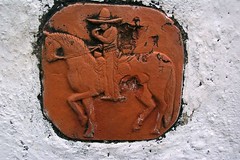
I covered my trip northward through the Salinas Valley in Part II. In this last segment of California Dreamin' I'll cover it again, only with a few photos and some additional details.
In Part VII, I had just pulled into Paso Robles on a Wednesday night after traversing up and over the Parkfield Grade. I had one more medical office building to look at in Templeton for a mold assessment, part of my whirl-wind week-long tour of California with sites in San Leandro, Los Gatos, and Manteca. Templeton lies between Paso Robles and Atascadero. I was booked into a Hampton Inn on the southern edge of Paso Robles for Wednesday and Thursday nights. It was a brand new hotel catering to the Central Coast wine tour crowd. With that theme in mind, I picked up a bottle of Castoro Cellars Fume Blanc from the local supermarket along with some other food items to stock in my room's pony fridge.
I met my site contact Thursday morning and went through the small building of medical office suites, mostly vacant. The site contact obviously had more important responsibilities, being the facilities manager at the local hospital, but he was polite and made sure I saw everything I needed. He was a younger good old boy who grew up in Bakersfield, a chunk of Oklahoma dropped into the center of California. He had a real nice rig, a Toyota Tundra in bright metallic blue, lifted and tricked out, and too nice to thrash off road. I was the only consultant (among several disciplines on this project) who had called ahead and scheduled an appointment for a site visit so he gave me some credit for that. My years of doing these things have taught me to head Murphy off wherever you can and confirming site visits is plain old Consulting 101. It surprises me to hear about consultants who just show up expecting to walk through. I couldn't afford any schedule glitches on this week-long tour.
I wrapped up the site visit in about an hour. I supposed I could've made a flight out of Oakland later that day. But the San Leandro draft report was due the following day (Friday) and I would've have lost a precious day driving up to Oakland. I sequestered myself in my room the rest of the day and into the night working on the San Leandro report. I finished it and emailed it off that night.
I didn't get to see much of Paso Robles except for driving around looking for places to eat and buy a latte at anyplace but Starbucks. I vaguely remember Paso Robles from passing through there on family vacations on the way up to Oregon for camping. We stayed in a motel there once. I had a shoebox full of wooly bear caterpillars that my mother allowed me to bring along on the trip or else they would starve. As a kid I always had some captured creatures I would keep like caterpillars, spiders including black widows, and lizards. Caterpillars were most fun because they eventually pupated and emerged as moths or butterflies. As it turned out, the shoebox of caterpillars was left behind outside of the motel room. When I realized we had forgotten the caterpillars we were already well down the road. I think my parents were secretly relieved of having to deal with a box full of caterpillars through a whole family camping trip.
I left Paso Robles Friday morning heading north through the Salinas Valley to catch a flight out of Oakland back to Seattle. I made several stops along the way as I mentioned in Part II.
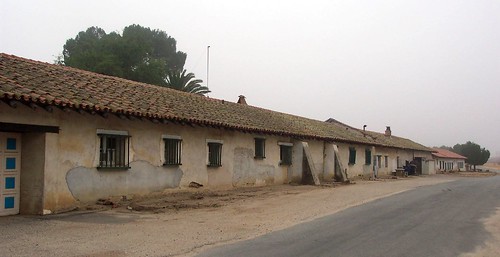
My first stop was Mission San Miguel Arcangel. Early morning low clouds added grayness and mystery to the mission buildings. The history of the mission includes the tragic murders of the Reed family here in 1848. I walked all around the perimeter of the mission, the gift shop and museum not opening until later in the morning. The church was closed indefinately, undergoing repairs from a December 2003 earthquake. The cracks in the front church wall are readily obvious. The repair operations are much in evidence around the church and associated buildings.
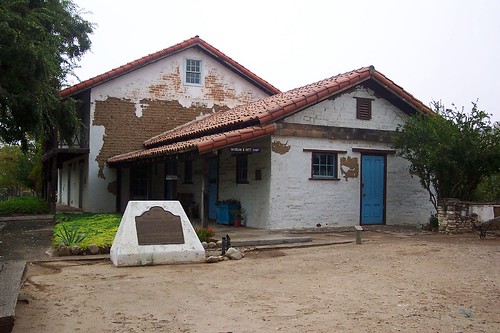
Across from Mission San Miguel is the Rios-Caledonia Adobe. I was the only there this morning except for the still slumbering caretaker. I feely walked the grounds without another soul to disturb my thoughts.
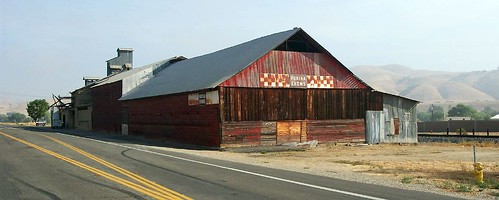
I stopped to photograph an old feed mill in San Miguel. It reminded me of the old CC Stafford feed mill near where I grew up as a boy, the mill already in decay as suburbia grew around it.
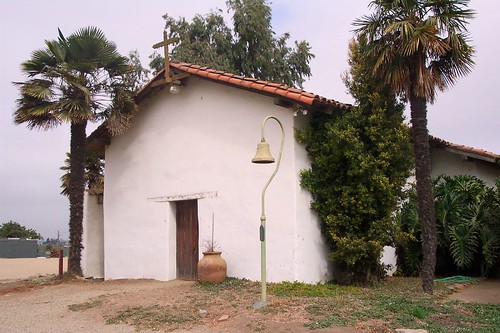
My last stop was at Mission Nuestra Senora de la Soledad. The mission sits out in the middle of the Salinas valley lettuce fields, isolated, with no adjacent town or city. I pretty much had the run of the place being the only tourist present. From my readings I recognized one of two marked graves as that of Jose Joaquin de Arrillaga.
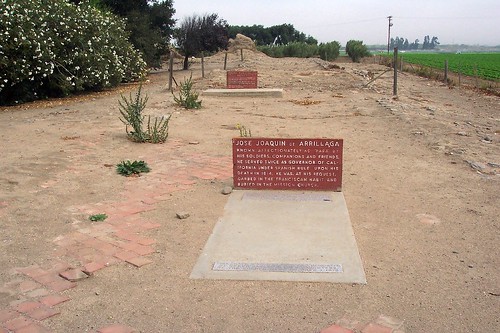
"As soon as we were informed of the arrival of the gobernador [Arrillaga], Lieutenant Davidov was sent ashore to welcome the company and extend our warmest acknowledgements for the friendly manner in which we had been received. On the following morning, when we expected our visit to be returned, there came two religiosos tendering apologies of the gobernador that, being advanced in years and of feeble constitution, he hoped to be excused from returning the visit, and at the same time requesting Rezanov, with all of the officers, to visit him at the presidio. The invitation was accepted, and we all went to the presidio, where we became acquainted with the gobernador, a venerable looking man of sixty years. He had come a distance of no less than twenty-five German miles, solely for the purpose of showing respect to us and making our stay as agreeable as possible."
Georg von Langsdorff - 1806
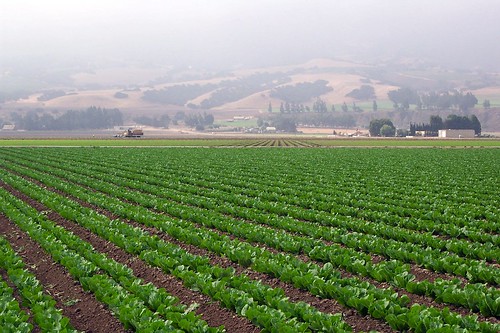
John Steinbeck describes the essence of California and the Salinas Valley the best in the opening of East of Eden.
"The Salinas Valley is in Northern California. It is a long narrow swale between two ranges of mountains, and the Salinas River winds and twists up the center until it falls at last into Monterey Bay.
I remember my childhood names for grasses and secret flowers. I remember where a toad may live and what time the birds awaken in summer - and what trees and seasons smelled like - how people looked and walked and smelled even. The memory of odors is very rich.
I remember that the Gabilan Mountains to the east of the valley were light gay mountains full of sun and loveliness and a kind of invitation, so that you wanted to climb into their warm foothills almost as you want to climb into the lap of a beloved mother. They were beckoning mountains with a brown grass love. The Santa Lucias stood up against the sky to the west and kept the valley from the open sea, and they were dark and brooding - unfriendly and dangerous. I always found in myself a dread of west and love of east. Where I ever got such an idea I cannot say, unless it could be that the morning came over the peaks of the Gabilans and the night drifted back from the ridges of the Santa Lucias. It may be that the birth and death of the day had some part in my feeling about the two ranges of mountains."
John Steinbeck - East of Eden
Saturday, November 11, 2006
Happy Birthday My Son
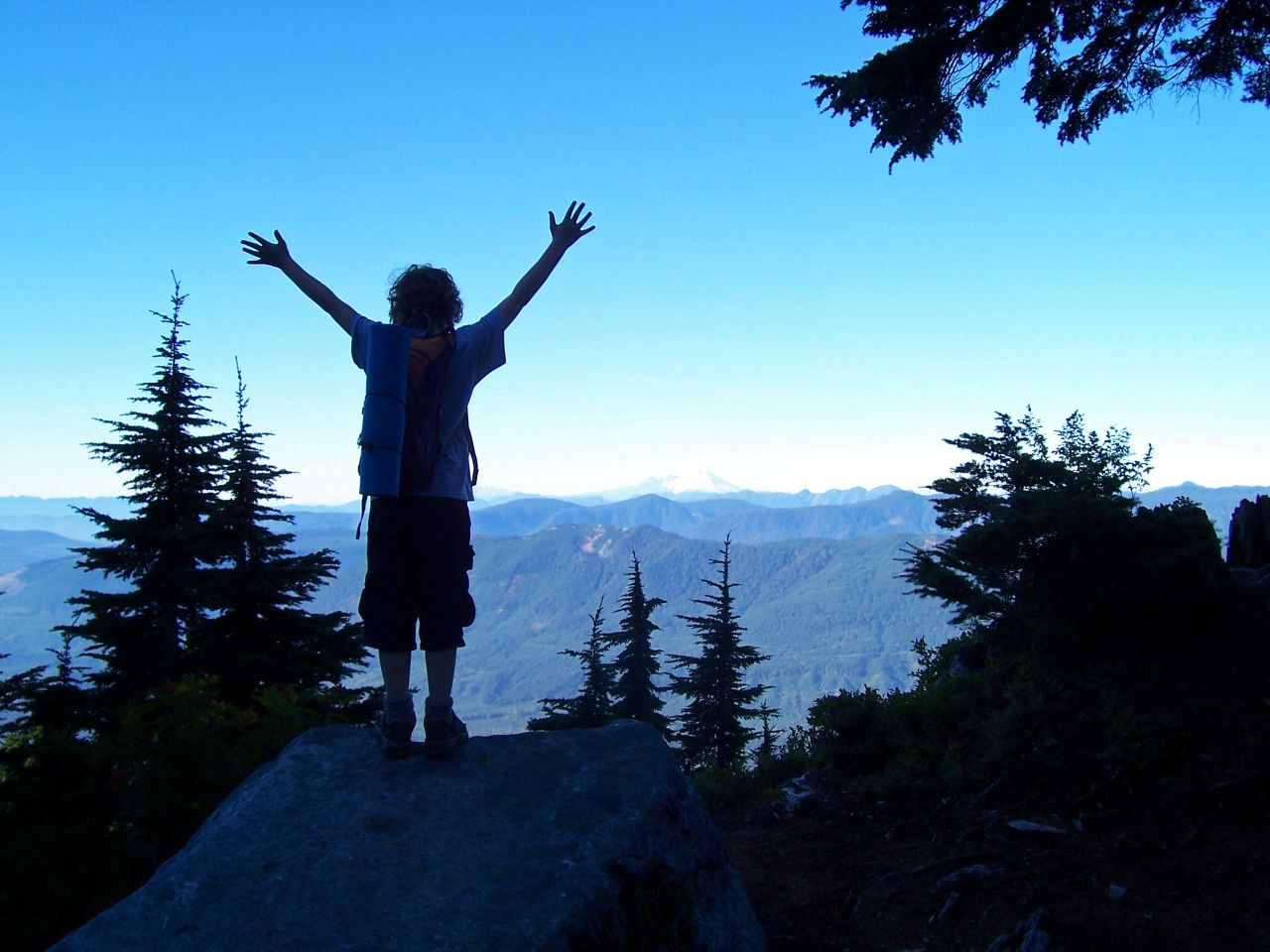
Yesterday was my youngest son's eleventh birthday. He's such a wonderful kid - handsome with his loosely curled blonde hair and blue eyes, polite, great vocabulary and a vivid imagination. He had three friends over for a sleepover plus older brother, who managed nicely not to pound or humiliate his little brother in front of his friends. Fun was had by all - electronic games, pizza, soda, pancakes and bacon for breakfast, followed by backyard potato gun fights. Nobody got hurt and nothing got broken.
Parkfield Grade - California Dreamin' Part VII
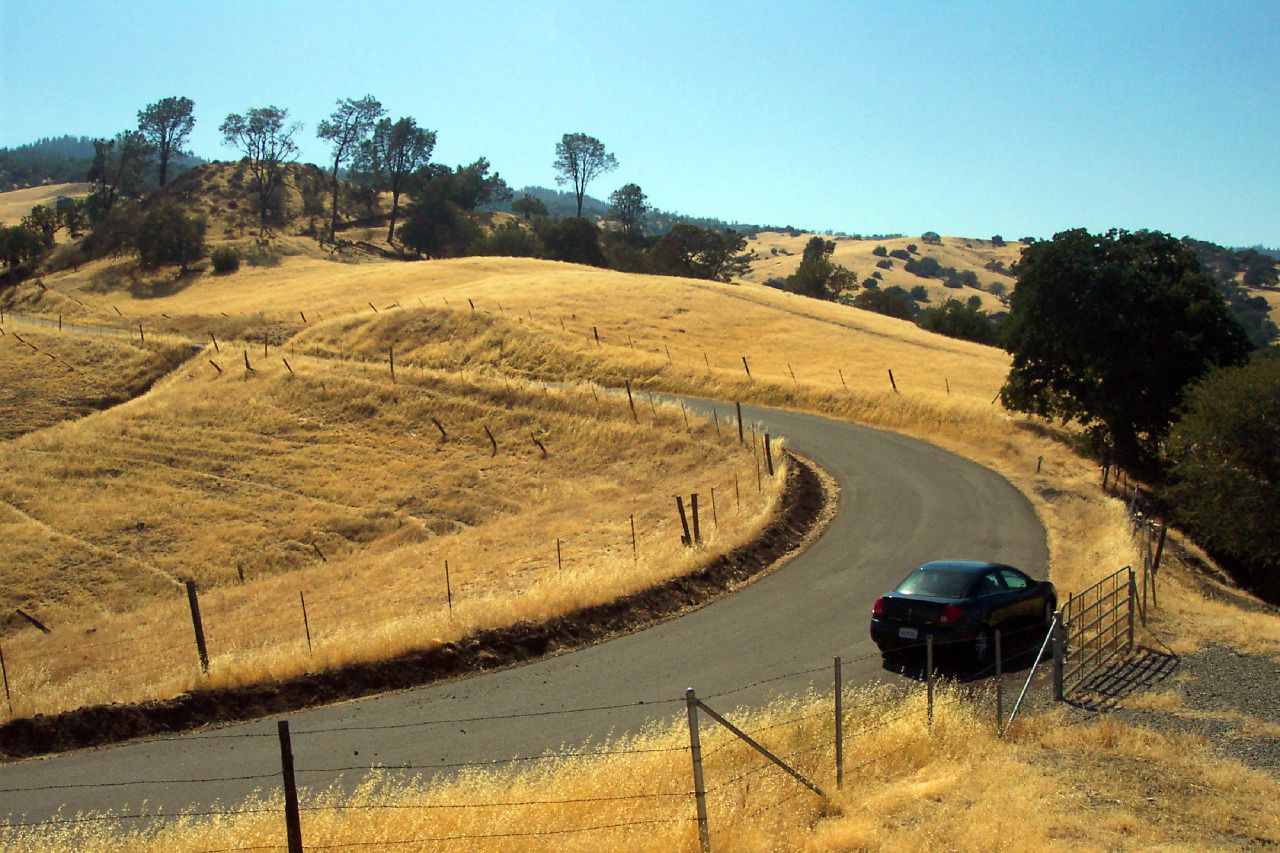 I had looked over a number of California state road maps at a Barnes & Noble in Tracy. I was exploring a number of ways to get from Manteca to Paso Robles the long way. One map, and only one of the maps I looked at showed a sliver of a road that left Highway 198 just after Coalinga and headed south through Parkfield connecting with Highway 46. Naturally, this was the map I bought.
In Part VI, I had stopped at a BLM pull-out for a leg stretch and snap shots. From there, I headed west again on Highway 198, vigilant for a side road to my left that would take me to Parkfield and beyond. Sooner than I could blink, I spotted a side road with a small sign that read "Parkfield Grade." Well that had to be it so I turned left.
 The road traversed over a broad rolling oak-studded plateau, dipped into a couple dry washes, then began twisting and climbing up into the rounded ridges of the central California Coast Ranges. I found a pull-out on the narrow road that afforded a grand view of the plateau I had just crossed. I loved being here. This was the real California with all the sights, smells, and familiarity of growing up and tramping through the golden hills of California. This time of year, they were truly baked to a shimmering gold. Were this March, these hills would be emerald green, teeming with wildflowers and buzzing insects. On this day life slumbers here beneath the withering late summer sun and twisted live oak branches.
I past interesting rock formations composed of ophiolite and serpentine, oceanic crust that was squeezed up by colliding crustal plates. The rocks were covered with a brilliant red lichen.
Climbing further, digger pines appeared, and then the pavement ended. I was sure that I was lost now, having seen only one other vehicle. The road became dirt and gravel yet still well graded enough for my rental car. On I went. I had plenty of gas.
 I crested at the county line leaving Fresno County and entering Monterey County. The road, still dirt, wound it's way down. I could see down the to Cholame Valley. I stopped just after the crest for more pictures of vistas and oak trees.
 I finally reached valley bottom at the V6 Ranch that later research told me was a bit of a working and guest ranch. From here the road was level and relatively straight, crossing the dry Little Cholame Creek on standard box truss bridges.
I pulled into Parkfield and it might as well have been a ghost town. The inn and restaurant were both closed. I had been looking forward to a lunch stop here. There's a small USGS building and an information board, Parkfield being the locus of earthquake prediction study along the San Andreas fault because of the regularity of earthquake occurrence.
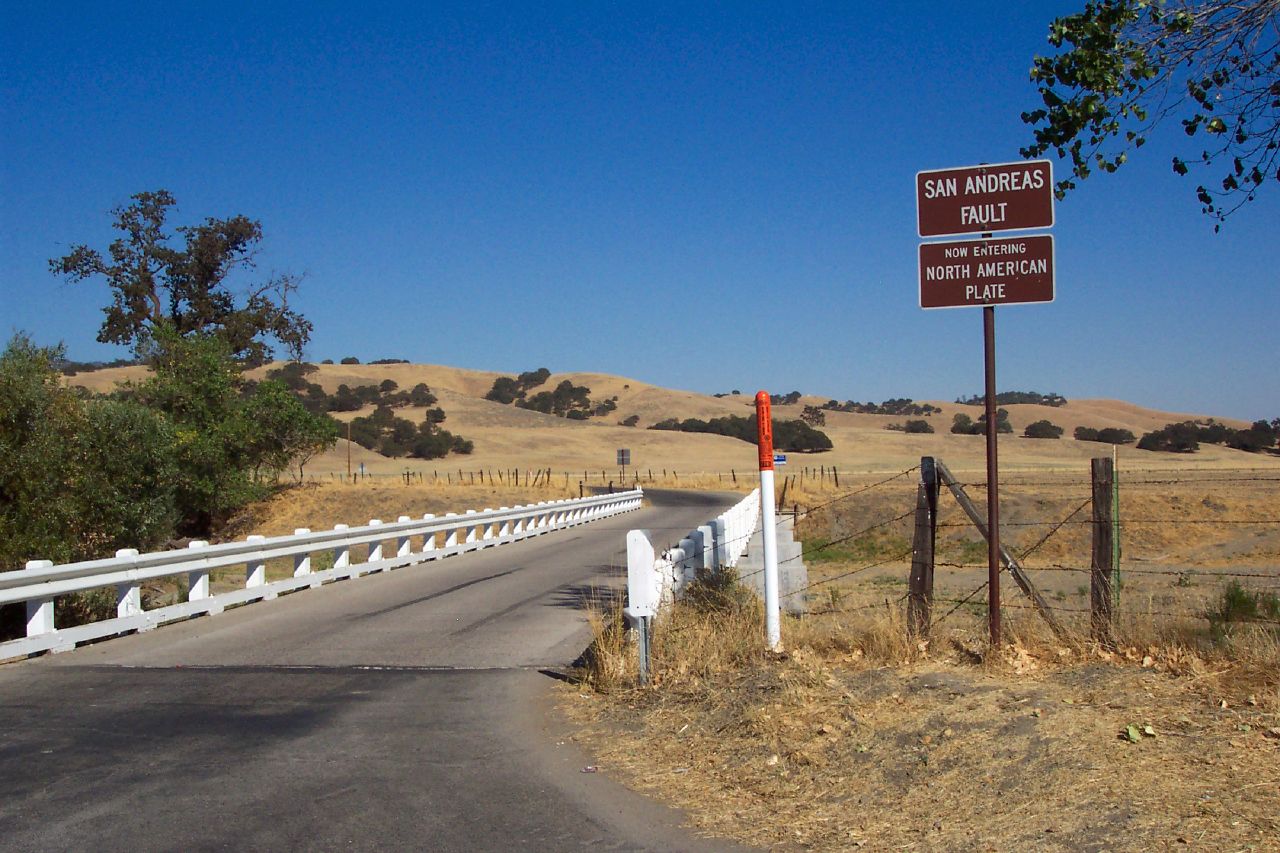 Just south of Parkfield, I stopped at the bridge where every tourist stops, the bridge slightly contorted by the slow creep of the San Andreas fault. One side of the bridge is the Pacific plate and the other is the North American plate. Whichever side you're standing, the opposite side will be moving to your right, assuming you're facing the other side. Therefore, as is well known, the San Andreas fault is a right-lateral strike-slip fault.
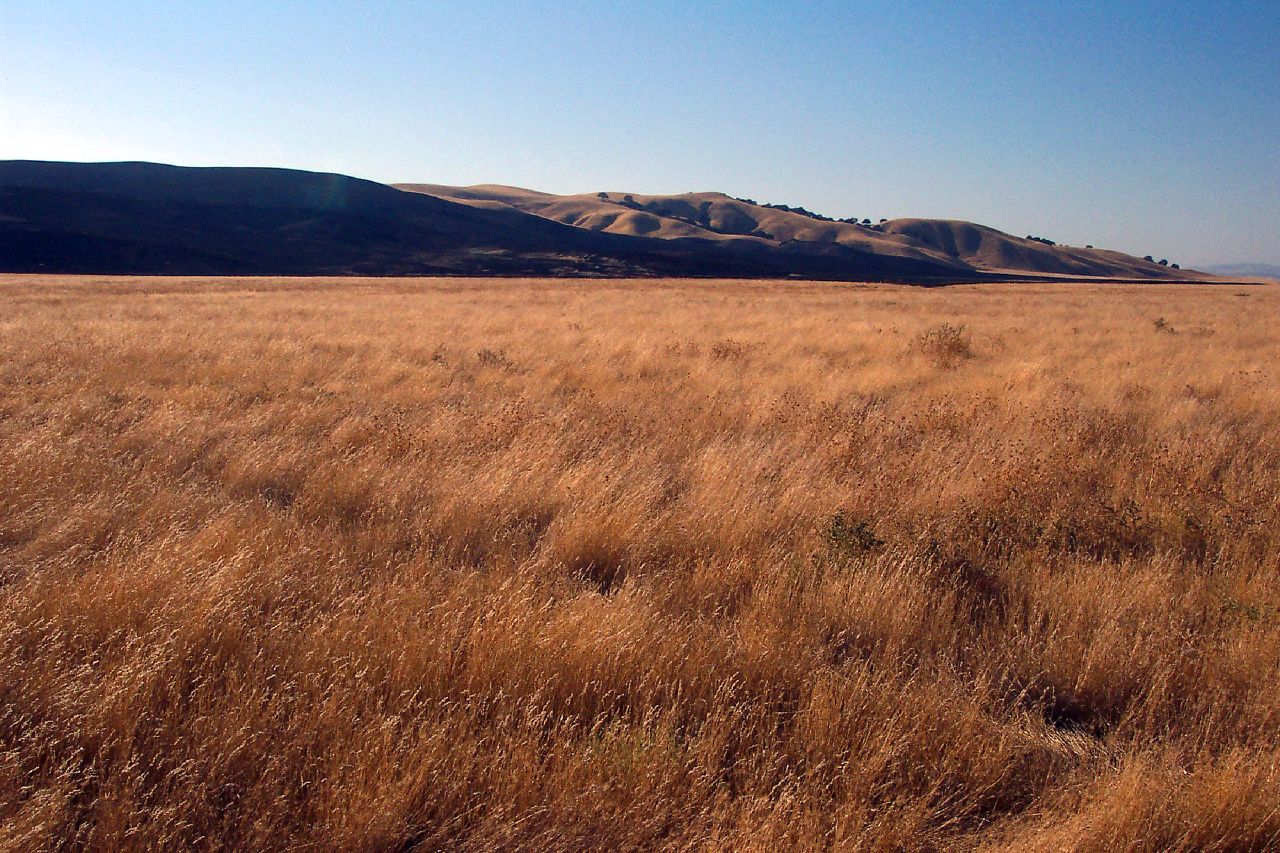 My little country road adventure finally came to an end at the intersection with Highway 46 under the low late afternoon sun at the bottom end of Cholame Valley. I stopped for a couple more snapshots before heading on to Paso Robles for the night. It was very near here where James Dean was killed on September 30, 1955 in a head-on collision at the intersection of Highway 46 and Highway 41. I was 6 months old at the time.
Friday, November 10, 2006
Dude, what are you reading?
Air travel gives me the time to do pleasure reading, especially if I'm stuck in a middle or aisle seat. I'm baffled by people who can seemingly sit for two hours on an airplane staring off into space. Oh sure, they'll pick up the airline magazine and quickly thumb through. A few people pull out their laptops and catch up on work or play a game. I seldom pull out the laptop except on longer cross-country flights, which for me are rare (last one was February 2004 to the Carolinas, into Charlotte and out Raleigh-Durham). Most of my air travel is western US, with flights under three hours. I'm usually not very chatty and most other people aren't either. Every once in awhile I sit next to an interesting chatterbox. Really, I prefer to read or stare out the window.
So what am I reading now? I just finished up "A World Transformed - Firsthand Accounts of California Before the Gold Rush" edited by Joshua Paddison. It's a collection of writings from early California explorers and adventurers like Juan Crespi, George Vancouver, and Richard Henry Dana, with Dana being the most interesting. I'm reading now "Bear Flag Rising - The Conquest of California, 1846" by Dale L. Walker. This book is about that short timeframe when Americans began streaming into California as the vangaurd of manifest destiny and Mexico lost control of her far off and neglected territory. The book has a great cast of real characters, the most infamous of course was John Charles Fremont.
I have been reading these books mostly because of my frequent travels to my native state. Sure, I picked up a lot of California history just growing up and going to school there. The history is worth refreshing and expanding, especially the colorful history of California. I so love history.
So what am I reading now? I just finished up "A World Transformed - Firsthand Accounts of California Before the Gold Rush" edited by Joshua Paddison. It's a collection of writings from early California explorers and adventurers like Juan Crespi, George Vancouver, and Richard Henry Dana, with Dana being the most interesting. I'm reading now "Bear Flag Rising - The Conquest of California, 1846" by Dale L. Walker. This book is about that short timeframe when Americans began streaming into California as the vangaurd of manifest destiny and Mexico lost control of her far off and neglected territory. The book has a great cast of real characters, the most infamous of course was John Charles Fremont.
I have been reading these books mostly because of my frequent travels to my native state. Sure, I picked up a lot of California history just growing up and going to school there. The history is worth refreshing and expanding, especially the colorful history of California. I so love history.
Thursday, November 09, 2006
A Couple Days Off
I'm taking a couple days off at the end of the week to recharge. This has been an almost non-stop busy year and I haven't taken much vacation time. The boys are off school for these two days and it's youngest sons birthday, turning 11. He's having some friends over Saturday for a sleepover, where they will "Destroy all Humans" and other fun electronic games.
I managed to push my Renton Phase I, the Silicon Valley parking lot Phase I, and the noise assessment reports out the door. We are also working on a much larger parcel in Silicon Valley that we're already into Phase II subsurface investigation for the usual suspects - gas stations and dry cleaners. I added my site visit findings to the OC Phase I report and sent it down to my colleague in Irvine.
I prepared a proposal for some additional contamination characterization at a Seattle Central District redevelopment project and we got the go-ahead for that. Now I need to schedule the drilling and find staff.
I prepared a proposal for remedial action services for a redevelopment site near downtown Tacoma to address lead contamination in surface soil. When old houses are demolished they usually leave behind traces of lead paint and that's what happened here. This is a soup-to-nuts project - workplan, excavation oversight, sampling, and closure report. We work with the Washington State Department of Ecology through their Voluntary Cleanup Program. We submit a Workplan that spells out how the lead soil will be removed, how and where we'll collect soil samples for analysis, and what criteria we'll use to confirm the site is cleaned up. I did a similar site just two blocks up the hill and obtained a "no further action" determination from Ecology. This new project is essentially the same as the one I did last year.
I managed to push my Renton Phase I, the Silicon Valley parking lot Phase I, and the noise assessment reports out the door. We are also working on a much larger parcel in Silicon Valley that we're already into Phase II subsurface investigation for the usual suspects - gas stations and dry cleaners. I added my site visit findings to the OC Phase I report and sent it down to my colleague in Irvine.
I prepared a proposal for some additional contamination characterization at a Seattle Central District redevelopment project and we got the go-ahead for that. Now I need to schedule the drilling and find staff.
I prepared a proposal for remedial action services for a redevelopment site near downtown Tacoma to address lead contamination in surface soil. When old houses are demolished they usually leave behind traces of lead paint and that's what happened here. This is a soup-to-nuts project - workplan, excavation oversight, sampling, and closure report. We work with the Washington State Department of Ecology through their Voluntary Cleanup Program. We submit a Workplan that spells out how the lead soil will be removed, how and where we'll collect soil samples for analysis, and what criteria we'll use to confirm the site is cleaned up. I did a similar site just two blocks up the hill and obtained a "no further action" determination from Ecology. This new project is essentially the same as the one I did last year.
Saturday, November 04, 2006
The OC in One Day
I flew down to John Wayne early Monday morning catching a 6:40 am flight out of SeaTac on Alaska. The line was long at Qdoba so I didn't have time to grab one of their decent breakfast burritos. The Starbucks line was long, too, and I usually try to avoid the homogeneity of Starbucks. So I stopped at Dilettante Chocolates & Mocha Café, across from Starbucks in Pacific Marketplace. I ordered my usual 20-oozer latte and a cranberry scone. The scone was soft and so unsconely uncrumbly. It sucked, but I ate it anyway.
The plane was full and I had a middle seat. At least on Southwest, I can usually score my coveted window seat 20F (or 20A) by checking in on-line and scoring the "A" group boarding pass. At least I got in a lot of pleasure reading over the two hour plus plane ride.
The last time I flew into John Wayne was a few years ago (I can't remember the exact year). It must have been not too long after 9/11 because I recall National Guardsman patrolling the terminal with M-16s.
The site I was visiting for this project was a large industrial/warehouse building located in northern Orange County. It was totally vacant but in its former life had been a carpet factory and most recently occupied by an aerospace company. Other consultants were running around the place, some I knew well, others I was meeting for the first time. I spent the better part of the day working my way around the property from the roof, to the inside, and around the outside. I collected samples of building materials for asbestos analysis, looked for indications of mold growth, stains, spills, and other indications of environmental problems. The place was swiss-cheesed with soil borings, some were hollow-stem auger borings and others were direct-push probe borings. Someone had characterized the site very well. But I had none of the data in hand.
I finally wrapped up my site work around 4:30 pm, finishing with a review and drive around of the surrounding properties. I didn't have enough time to review building permits at the city. I had wanted to finish the day with a walk around Upper Newport Bay, but the days are too short this time of year and when the sun goes down in these southerly southern California latitudes it gets dark quickly. Picture the sun diving into a pool. In Seattle, the sun dives into the pool at a low angle, not quite a belly flop but more a racing dive. In southern California, the sun dives almost straight down.
I was starving having milked that soggy scone for all it was worth for the whole day. I decided to head over to Costa Mesa to see if that sandwich place was still there at 17th and Orange that I used to stop at after a day at the beach (Newport Beach). Sadly it's a dry cleaner now. But Chester Drawers was still there tucked in the corner of that neighborhood shopping center, a great little spot with beer, burgers, dancing, and shuffleboard. The clientele going in was young and beautiful, just like it was 20 years ago when I would hang out there with my Orange County friends. I'm not so young and beautiful anymore, so I grabbed a sandwich from a nearby Panera.
I checked in early for my non-stop flight home to Seattle, which as it turned out was canceled. The ticket agent was having a bad day and so it made me have a bad day. Being nice comes easy for me and it usually results in reciprocating niceness. When people are not nice I can be just as not nice or even more so. Not getting much help from the Miss Not Nice, I went over to another to another ticket agent who was very nice and pleasant, who booked me on a flight stopping in Oakland then on to Seattle.
I had a window seat but it was already nighttime, which did make for beautiful city light views. I sat next to a father and his five year old daughter. She was a delightful and intelligent child. They were returning from a trip to Disneyland.
I finally walked in through the door at home around 12:30 am. I scrounged for a little snack food, crawled into bed, kissed the wife, rolled over and fell asleep.
The plane was full and I had a middle seat. At least on Southwest, I can usually score my coveted window seat 20F (or 20A) by checking in on-line and scoring the "A" group boarding pass. At least I got in a lot of pleasure reading over the two hour plus plane ride.
The last time I flew into John Wayne was a few years ago (I can't remember the exact year). It must have been not too long after 9/11 because I recall National Guardsman patrolling the terminal with M-16s.
The site I was visiting for this project was a large industrial/warehouse building located in northern Orange County. It was totally vacant but in its former life had been a carpet factory and most recently occupied by an aerospace company. Other consultants were running around the place, some I knew well, others I was meeting for the first time. I spent the better part of the day working my way around the property from the roof, to the inside, and around the outside. I collected samples of building materials for asbestos analysis, looked for indications of mold growth, stains, spills, and other indications of environmental problems. The place was swiss-cheesed with soil borings, some were hollow-stem auger borings and others were direct-push probe borings. Someone had characterized the site very well. But I had none of the data in hand.
I finally wrapped up my site work around 4:30 pm, finishing with a review and drive around of the surrounding properties. I didn't have enough time to review building permits at the city. I had wanted to finish the day with a walk around Upper Newport Bay, but the days are too short this time of year and when the sun goes down in these southerly southern California latitudes it gets dark quickly. Picture the sun diving into a pool. In Seattle, the sun dives into the pool at a low angle, not quite a belly flop but more a racing dive. In southern California, the sun dives almost straight down.
I was starving having milked that soggy scone for all it was worth for the whole day. I decided to head over to Costa Mesa to see if that sandwich place was still there at 17th and Orange that I used to stop at after a day at the beach (Newport Beach). Sadly it's a dry cleaner now. But Chester Drawers was still there tucked in the corner of that neighborhood shopping center, a great little spot with beer, burgers, dancing, and shuffleboard. The clientele going in was young and beautiful, just like it was 20 years ago when I would hang out there with my Orange County friends. I'm not so young and beautiful anymore, so I grabbed a sandwich from a nearby Panera.
I checked in early for my non-stop flight home to Seattle, which as it turned out was canceled. The ticket agent was having a bad day and so it made me have a bad day. Being nice comes easy for me and it usually results in reciprocating niceness. When people are not nice I can be just as not nice or even more so. Not getting much help from the Miss Not Nice, I went over to another to another ticket agent who was very nice and pleasant, who booked me on a flight stopping in Oakland then on to Seattle.
I had a window seat but it was already nighttime, which did make for beautiful city light views. I sat next to a father and his five year old daughter. She was a delightful and intelligent child. They were returning from a trip to Disneyland.
I finally walked in through the door at home around 12:30 am. I scrounged for a little snack food, crawled into bed, kissed the wife, rolled over and fell asleep.
Sunday, October 29, 2006
Parkfield Junction - California Dreamin' - Part VI
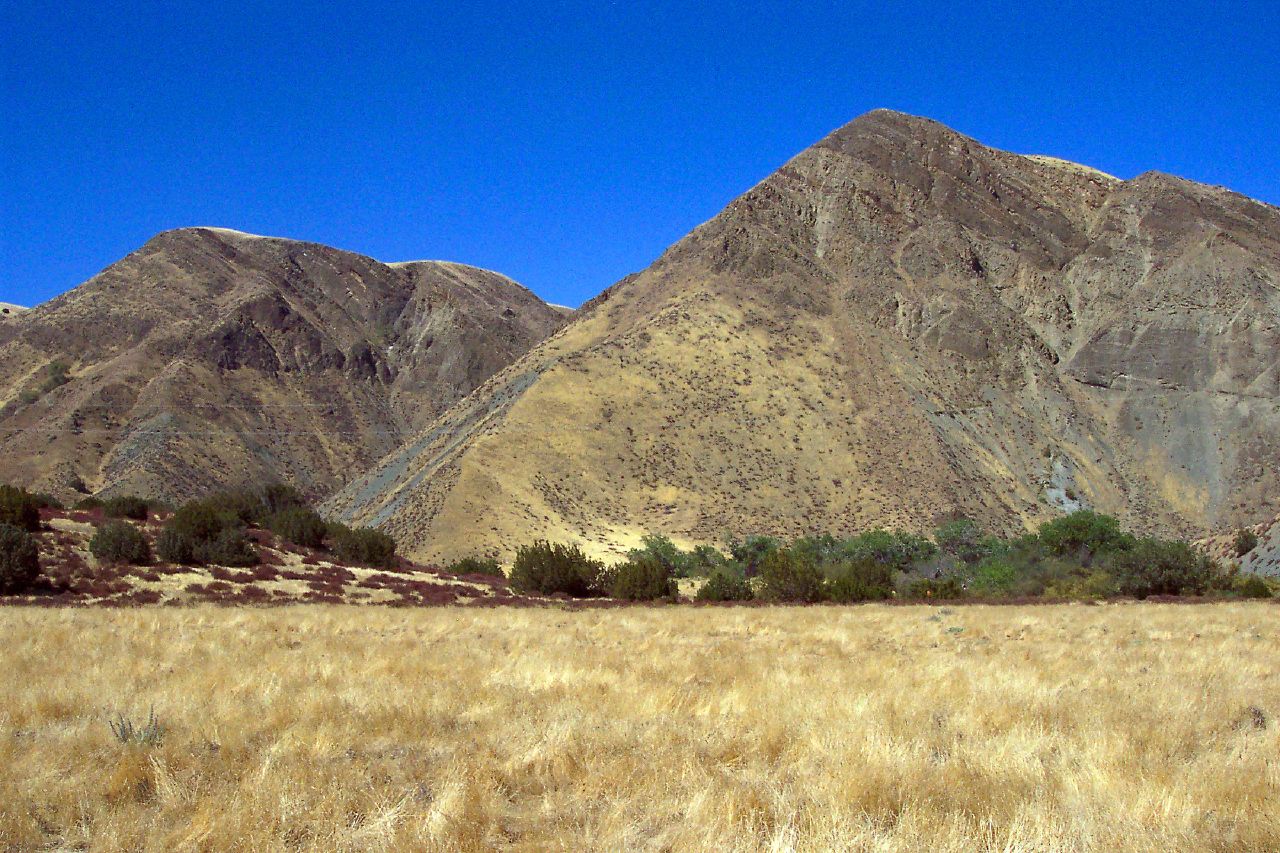 I left Coalinga heading west into the California Coast Ranges on a curving Highway 198. The golden hills opened and closed on the winding road. Each turn in the road offered a new vista. I was looking for the junction to Parkfield on a road that would take me south through Parkfield and eventually to end up in Paso Robles later in the day. A small dirt parking area caught my on the right and I jammed the breaks to pull in. It was a BLM access for a place called Curry Mountain. It was nice to stretch a few minutes, smell the air, admire the views and take a few photos.
Upcoming Events - The OC
I fly down to The OC Monday morning catching a very early 6:40 am flight into John Wayne. I'm picking up a Phase I site visit of a warehouse building in north Orange County for our favorite client. My Irvine office colleague who would normally do this is buried in work. I fly back out the same evening, getting back into SeaTac at 11:14 pm. It looks to be a long day with plenty of time to catch up on my pleasure reading. I'm not one to unfold the laptop on the plane and work. I read or look out the window. It's likely I'll have time for a walk around Upper Newport Bay before I fly out - a great birding spot and close to the airport.
We completed a one-day internal training course last week on the new ASTM E 1527-05 standard practice, updated for the new All Appropriate Inquiry (AAI) rules coming out. I was one of the course instructors. I had a fun time doing it.
I have some outstanding reports to work on also - the Silicon Valley parking lot Phase I, a workplace noise assessment report, and a demolition-level asbestos survey report I did of a building undergoing interior renovations for a Microsoft move-in. Jeez, I wear a few hats.
The noise survey was interesting. I hung noise dosimeters on two employees and spent the rest of the day walking around measuring noise levels of different worker tasks using a hand-held sound level meter. Now the report is way overdue. Ugh!
I have a soil and groundwater investigation coming up in southern Oregon. It's for a national client buying a neighboring property at one of their facilities so they can expand. This is an interesting site with interesting problems. More on that later when it comes up. I have one of my Portland colleagues pegged for the field work.
We completed a one-day internal training course last week on the new ASTM E 1527-05 standard practice, updated for the new All Appropriate Inquiry (AAI) rules coming out. I was one of the course instructors. I had a fun time doing it.
I have some outstanding reports to work on also - the Silicon Valley parking lot Phase I, a workplace noise assessment report, and a demolition-level asbestos survey report I did of a building undergoing interior renovations for a Microsoft move-in. Jeez, I wear a few hats.
The noise survey was interesting. I hung noise dosimeters on two employees and spent the rest of the day walking around measuring noise levels of different worker tasks using a hand-held sound level meter. Now the report is way overdue. Ugh!
I have a soil and groundwater investigation coming up in southern Oregon. It's for a national client buying a neighboring property at one of their facilities so they can expand. This is an interesting site with interesting problems. More on that later when it comes up. I have one of my Portland colleagues pegged for the field work.
The Best Laid Plans
Most of the soil and groundwater results came in for our Phase II project down in Silicon Valley. All looked initially good. We had some low level hits of diesel and motor oil range petroleum hydrocarbons in the groundwater, but no VOC hits in soil or groundwater. This is a bit unusual. Why no VOC or gasoline hits? You always expect some VOCs with a petroleum release. On face value this looked like a manageable problem - long term groundwater monitoring at worst was what I was seeing. I was still troubled by the source of the contamination. Where could these low level petroleum hits be coming from? Our investigation was really just a set of pin pricks into the ground. A potential source could lie under the buildings, which we could not access.
The other concern was we didn't yet have the parking lot results. They went to the lab late Friday. When those remaining results came in late Tuesday it was a shocker - big diesel and motor oil petroleum hits in groundwater. Again, nothing in soil and no VOC hits. The source was likely off site somewhere and potentially on the adjoining property that we initially investigated earlier in the week. We had no way to conclusively determine groundwater flow direction at this point. We had a notion of groundwater flow direction. However, below-ground parking garages were located on the neighboring properties. If these garages have sump pumps to keep groundwater out, then the pumping could locally influence groundwater flow direction.
Now we just have to wait and see where this goes next. It's in the hands of the buyer and seller, their attorneys, the lenders, and the insurance people.
The other concern was we didn't yet have the parking lot results. They went to the lab late Friday. When those remaining results came in late Tuesday it was a shocker - big diesel and motor oil petroleum hits in groundwater. Again, nothing in soil and no VOC hits. The source was likely off site somewhere and potentially on the adjoining property that we initially investigated earlier in the week. We had no way to conclusively determine groundwater flow direction at this point. We had a notion of groundwater flow direction. However, below-ground parking garages were located on the neighboring properties. If these garages have sump pumps to keep groundwater out, then the pumping could locally influence groundwater flow direction.
Now we just have to wait and see where this goes next. It's in the hands of the buyer and seller, their attorneys, the lenders, and the insurance people.
Friday, October 27, 2006
Fall in Skagit County
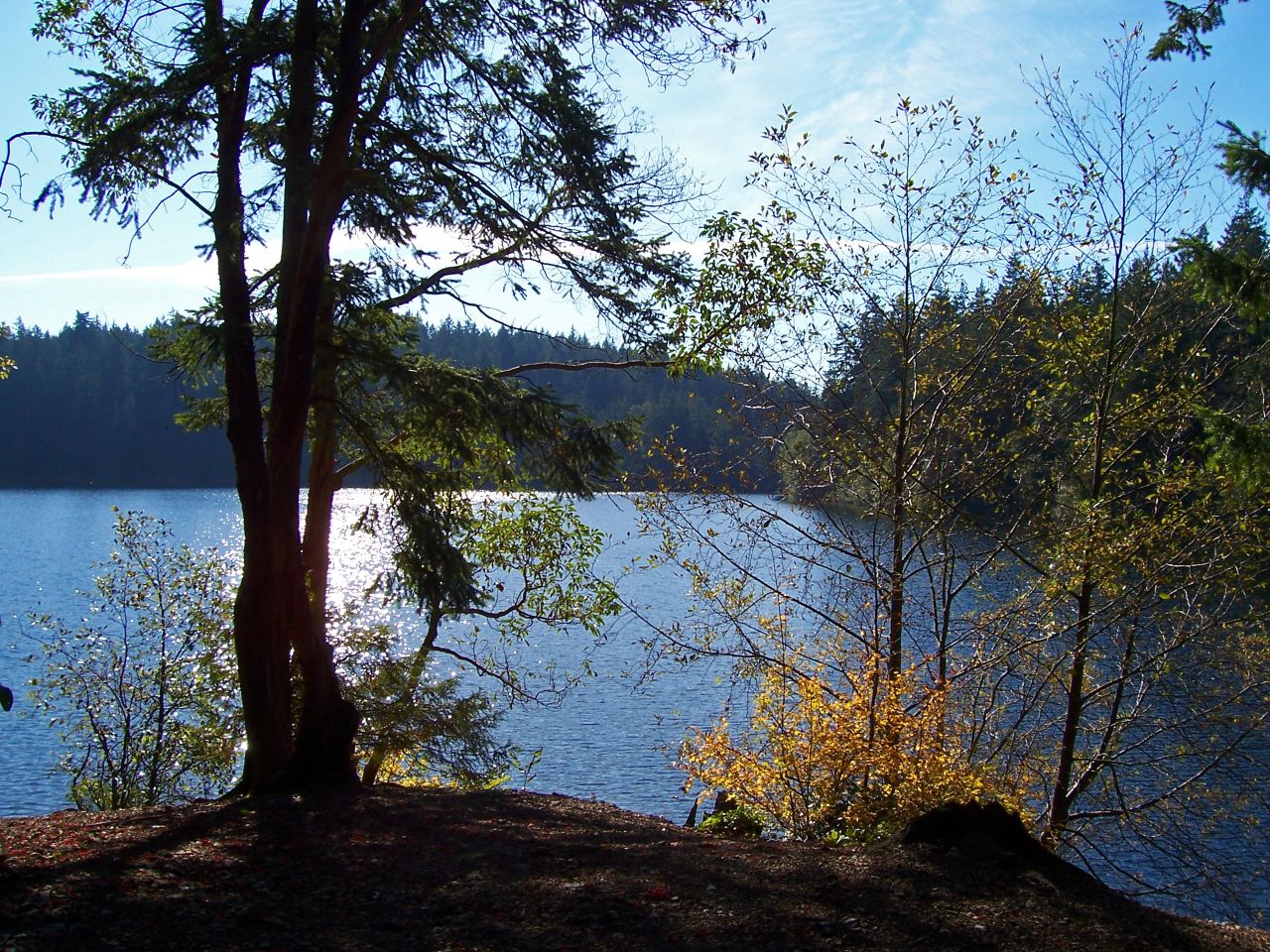 Last weekend I drove up to the Skagit Valley with my parents and youngest son. It's becoming a fall tradition. First we stopped for donuts at my favorite donut place anywhere - The Donut House in Anacortes (2719 Commercial Ave).
  After we pigged out on donuts we took the short hike to Whistle Lake in the Anacortes Forest Lands. The bigleaf maples were at their peak color.
We stopped at Tulip Town to buy bulbs. The best, biggest, and choicest bulbs are had right here from the grower.
We finished the day at the Skagit River Brewery for dinner and beers. Quality time with my folks who aren't getting any younger.
Sunday, October 22, 2006
Pleasant Friday
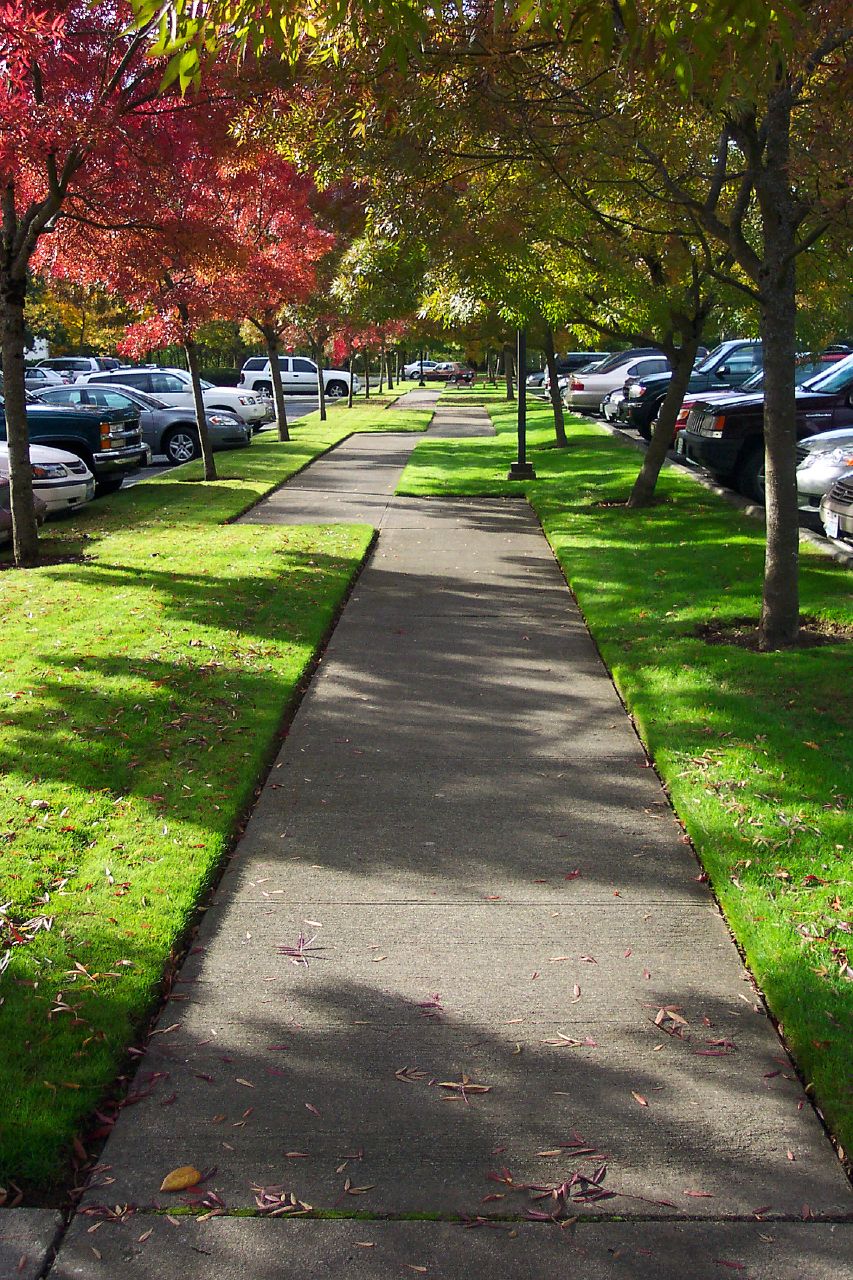
I had a field day out of the office on Friday doing a site visit at two office parks in Renton. This was for a new client referred to us by a property condition consultant we cross paths with often. Typical site visit it was with a number of consultants running around the properties, most I've known for years. The tenants were all nice. The weather was gorgeous, a clear autumn day. It was a perfect way to end the week.
Saturday, October 21, 2006
My Back Pages
I dropped the car off for an oil change at Toyota - every fourth change free. Yeah, you change your own oil, I know. Well I've changed a ton of oil and it doesn't get any more pleasant. I take advantage of the time and go for a long walk, snap a few photos of things that catch my interest. I strolled into the supermarket espresso place and ordered up a 20 ozer latte. The Byrds "My Back Pages" was playing. Man I love that song, written by Bob Dylan. I found a You Tube video from Bob Dylan's 30th anniversary tour, with Roger McGuinn leading things off accompanied by Eric Clapton, George Harrison, Tom Petty, and Neil Young.
Crimson flames tied through my ears
Rollin' high and mighty traps
Pounced with fire on flaming roads
Using ideas as my maps
"We'll meet on edges, soon," said I
Proud 'neath heated brow
Ah, but I was so much older then
I'm younger than that now.
Half-cracked prejudice leaped forth
"Rip down all hate," I screamed
Lies that life is black and white
Spoke from my skull, I dreamed
Romantic facts of musketeers
Foundationed deep, somehow
Ah, but I was so much older then
I'm younger than that now.
Girls' faces formed the forward path
From phony jealousy
To memorizing politics
Of ancient history
Flung down by corpse evangelists
Unthought of, though, somehow
Ah, but I was so much older then
I'm younger than that now.
A self-ordained professor's tongue
Too serious to fool
Spouted out that liberty
Is just equality in school
"Equality," I spoke the word
As if a wedding vow
Ah, but I was so much older then
I'm younger than that now.
In a soldier's stance, I aimed my hand
At the mongrel dogs who teach
Fearing not that I'd become my enemy
In the instant that I preach
My existence led by confusion boats
Mutiny from stern to bow
Ah, but I was so much older then
I'm younger than that now.
Yes, my guard stood hard when abstract threats
Too noble to neglect
Deceived me into thinking
I had something to protect
Good and bad, I define these terms
Quite clear, no doubt, somehow
Ah, but I was so much older then
I'm younger than that now.
Crimson flames tied through my ears
Rollin' high and mighty traps
Pounced with fire on flaming roads
Using ideas as my maps
"We'll meet on edges, soon," said I
Proud 'neath heated brow
Ah, but I was so much older then
I'm younger than that now.
Half-cracked prejudice leaped forth
"Rip down all hate," I screamed
Lies that life is black and white
Spoke from my skull, I dreamed
Romantic facts of musketeers
Foundationed deep, somehow
Ah, but I was so much older then
I'm younger than that now.
Girls' faces formed the forward path
From phony jealousy
To memorizing politics
Of ancient history
Flung down by corpse evangelists
Unthought of, though, somehow
Ah, but I was so much older then
I'm younger than that now.
A self-ordained professor's tongue
Too serious to fool
Spouted out that liberty
Is just equality in school
"Equality," I spoke the word
As if a wedding vow
Ah, but I was so much older then
I'm younger than that now.
In a soldier's stance, I aimed my hand
At the mongrel dogs who teach
Fearing not that I'd become my enemy
In the instant that I preach
My existence led by confusion boats
Mutiny from stern to bow
Ah, but I was so much older then
I'm younger than that now.
Yes, my guard stood hard when abstract threats
Too noble to neglect
Deceived me into thinking
I had something to protect
Good and bad, I define these terms
Quite clear, no doubt, somehow
Ah, but I was so much older then
I'm younger than that now.
Tuesday, October 17, 2006
Added Scope
All was going well down in Sunnyvale, albeit a little slow. A number of factors were slowing us down. We had to increase our target depth beyond 20 feet to intercept and collect groundwater samples from about 28 to 32 feet. We were hand augering the first 5 feet to clear utilities. We encountered a layer of gravel that collapsed into the hole each time we tripped out. Gravel can also have a camming affect on the rods and core barrel that can make it hard to pull them out of the the hole.
Our client called late in the afternoon and to let us know that they were also buying an adjoining parking lot that reportedly had a gas station. I quickly checked Sanborn Maps and found no gas station, but I did find that the lot had a truck repair facility in the 1940s and a print shop in the 1950s. Bad enough. We now needed to investigate soil and groundwater quality on this lot. The downside is we couldn't start for another two days. The one-call utility notification requires 48 hours before you can start drilling. This gives all the underground utilities time to mark the locations of their buried utilities. Hitting underground utilities can ruin your day and maybe get someone injured or killed.
I got the wheels in motion. I called the one-call underground notification system. I called the drilling company and fortunately they had Friday open, the soonest we could start after the 48 hour waiting period. I called our field geologist to mark out the new locations in white marking paint and to have her prepare for Friday. I love it when a plan falls apart and then comes back together nicely in a new form.
Our client called late in the afternoon and to let us know that they were also buying an adjoining parking lot that reportedly had a gas station. I quickly checked Sanborn Maps and found no gas station, but I did find that the lot had a truck repair facility in the 1940s and a print shop in the 1950s. Bad enough. We now needed to investigate soil and groundwater quality on this lot. The downside is we couldn't start for another two days. The one-call utility notification requires 48 hours before you can start drilling. This gives all the underground utilities time to mark the locations of their buried utilities. Hitting underground utilities can ruin your day and maybe get someone injured or killed.
I got the wheels in motion. I called the one-call underground notification system. I called the drilling company and fortunately they had Friday open, the soonest we could start after the 48 hour waiting period. I called our field geologist to mark out the new locations in white marking paint and to have her prepare for Friday. I love it when a plan falls apart and then comes back together nicely in a new form.
Monday, October 16, 2006
On to Phase II
The preliminary information we gathered on the Silicon Valley site revealed that the site historically had a dry cleaner tenant and, before the development of the existing buildings in the late 1960s, had two gas stations located on the property during the 1940s and 1950s. This information came from a prior Phase I report provided to us when we started the project. Other corroborating sources we looked at were Sanborn Maps and old city directories. Polk's and Haines directories are the common ones we find. You can find them in your local library.
The thing about dry cleaners is that they commonly use a chemical called tetrachlorothylene, synonymously known as perchloroethylene - PCE for short, or simply "perc." PCE is a chlorinated solvent that can adversely affect health with enough exposure, typically through inhalation or direct contact in an occupational setting. PCE is also a carcinogen. Usually dry cleaner sites that have been around a number of years have caused some PCE contamination to soil and even groundwater. Once it gets into groundwater, it's a bitch to cleanup. PCE gets into the ground a number of ways, usually through the mishandling of the chemical, chemical waste, and by dumping down the drain, storm drain, or out behind the store. PCE can find its way through a crack or expansion joint in the floor slab and leach out from a sewer line. Finding a dry cleaner during the Phase I assessment is almost an automatic Phase II subsurface investigation. Or it can just kill the deal.
Gas stations store their fuel supply in underground storage tanks. These tanks and the related piping have leaked more often than not at old gas station sites. Old gas stations also may have had auto service with hydraulic hoists in the service bays. The below ground mechanisms can leak hydraulic oil. Used oil is often stored in underground tanks. Solvents may have been used to clean parts. Gas stations, as you can see, have many potential sources for contamination to get into the ground. Gasoline, diesel, oil, and, in some cases, solvents are the potential contaminants.
Compared to PCE, petroleum contamination is relatively easy to chase. It usually smells and petroleum contaminated soil is usually discolored. Petroleum products float on water such that when a release of say gasoline or diesel filters down through the soil and encounters the water table it flattens out and floats. Of course, some fraction also dissolves into the groundwater. PCE, on the other hand, is volatile and the vapors travel along preferential pathways through the soil such as sandy zones, utility trenches, and under pavement. It is not obvious by smell or color in soil at trace but still hazardous concentrations. We use a hand-held organic vapor monitor to screen soil for PCE and other solvents. PCE is also heavier than water so it sinks rather than floats in groundwater. PCE is nasty stuff.
Based on these findings, I put together a scope and budget to sample and analyze soil and groundwater samples at the former dry cleaner and two gas station locations. We will use direct-push probe methods ("Geoprobe"). Direct push probing is basically driving a hollow core barrel into the soil and retrieving a core sample of soil. When we hit groundwater, we will collect a groundwater sample using a number of methods. The most basic method is to drop a slotted 3/4 inch PVC casing down into the probe hole and pump out the sample. Another method is to drive a hydropunch to the desired sampling depth and pump out a water sample. A hydropunch is a stainless steel well screen with a retractable sleeve.
As of today, we completed two probe borings. I had selected a target depth of 20 feet, expecting we'd encounter groundwater before 20 feet. I got a call from the young geologist in the field "20 feet and still no water." I told her to go another 10 feet and call back. As it turns out we hit groundwater at 28 feet.
No signs of contamination, but we'll see what the laboratory finds in the samples. We're doing a 24-hour turnaround, which is extremely fast and pricey. But the client needs results quick so they can make a decision on purchasing the property. Real estate transactions have become fast-paced, almost too fast-paced.
The thing about dry cleaners is that they commonly use a chemical called tetrachlorothylene, synonymously known as perchloroethylene - PCE for short, or simply "perc." PCE is a chlorinated solvent that can adversely affect health with enough exposure, typically through inhalation or direct contact in an occupational setting. PCE is also a carcinogen. Usually dry cleaner sites that have been around a number of years have caused some PCE contamination to soil and even groundwater. Once it gets into groundwater, it's a bitch to cleanup. PCE gets into the ground a number of ways, usually through the mishandling of the chemical, chemical waste, and by dumping down the drain, storm drain, or out behind the store. PCE can find its way through a crack or expansion joint in the floor slab and leach out from a sewer line. Finding a dry cleaner during the Phase I assessment is almost an automatic Phase II subsurface investigation. Or it can just kill the deal.
Gas stations store their fuel supply in underground storage tanks. These tanks and the related piping have leaked more often than not at old gas station sites. Old gas stations also may have had auto service with hydraulic hoists in the service bays. The below ground mechanisms can leak hydraulic oil. Used oil is often stored in underground tanks. Solvents may have been used to clean parts. Gas stations, as you can see, have many potential sources for contamination to get into the ground. Gasoline, diesel, oil, and, in some cases, solvents are the potential contaminants.
Compared to PCE, petroleum contamination is relatively easy to chase. It usually smells and petroleum contaminated soil is usually discolored. Petroleum products float on water such that when a release of say gasoline or diesel filters down through the soil and encounters the water table it flattens out and floats. Of course, some fraction also dissolves into the groundwater. PCE, on the other hand, is volatile and the vapors travel along preferential pathways through the soil such as sandy zones, utility trenches, and under pavement. It is not obvious by smell or color in soil at trace but still hazardous concentrations. We use a hand-held organic vapor monitor to screen soil for PCE and other solvents. PCE is also heavier than water so it sinks rather than floats in groundwater. PCE is nasty stuff.
Based on these findings, I put together a scope and budget to sample and analyze soil and groundwater samples at the former dry cleaner and two gas station locations. We will use direct-push probe methods ("Geoprobe"). Direct push probing is basically driving a hollow core barrel into the soil and retrieving a core sample of soil. When we hit groundwater, we will collect a groundwater sample using a number of methods. The most basic method is to drop a slotted 3/4 inch PVC casing down into the probe hole and pump out the sample. Another method is to drive a hydropunch to the desired sampling depth and pump out a water sample. A hydropunch is a stainless steel well screen with a retractable sleeve.
As of today, we completed two probe borings. I had selected a target depth of 20 feet, expecting we'd encounter groundwater before 20 feet. I got a call from the young geologist in the field "20 feet and still no water." I told her to go another 10 feet and call back. As it turns out we hit groundwater at 28 feet.
No signs of contamination, but we'll see what the laboratory finds in the samples. We're doing a 24-hour turnaround, which is extremely fast and pricey. But the client needs results quick so they can make a decision on purchasing the property. Real estate transactions have become fast-paced, almost too fast-paced.
Thursday, October 12, 2006
Silicon Valley Phase I
Monday and Tuesday of this week found me in Silicon Valley doing that Phase I project. I met one of my colleagues from our Sacramento office who came out to lend a hand. She's a young woman who impressed me with her initiative and intelligence. Our company hires some remarkable young people. We spent the day going through the property. I had budgeted two days for two people. But toward the end of the day I realized that I could wrap up the field work the following day by myself. With that I dispatched my colleague to head back to Sacramento. She was quite happy to be heading back home, being a newlywed with a new house and working on her Master's thesis.
Tuesday I met with the roofing consultant and two roofers to run around the roofs shagging roof core samples for asbestos analysis. The roofing consultant is a friend who I see on all these jobs we do for this client. He had just returned from Cabo and so we told our favorite Baja stories. I probably wouldn't recognize Cabo from when I was last there in the late 1980s. Even the barren beaches of Todos Santos are being developed.
We were joined later in the morning by the property condition consultant, another friend seen on these jobs. I joined the PCA consultant for a two beer lunch at the Firehouse Brewery. After that, I skipped over to the library to review city directories, a tedious task made more efficient with a digital camera.
I packed up and caught the 8:30 pm flight from SJC to SEA. I walked into the house about 11:40. My wife had made a delicious apple cake that made the perfect midnight snack.
Tuesday I met with the roofing consultant and two roofers to run around the roofs shagging roof core samples for asbestos analysis. The roofing consultant is a friend who I see on all these jobs we do for this client. He had just returned from Cabo and so we told our favorite Baja stories. I probably wouldn't recognize Cabo from when I was last there in the late 1980s. Even the barren beaches of Todos Santos are being developed.
We were joined later in the morning by the property condition consultant, another friend seen on these jobs. I joined the PCA consultant for a two beer lunch at the Firehouse Brewery. After that, I skipped over to the library to review city directories, a tedious task made more efficient with a digital camera.
I packed up and caught the 8:30 pm flight from SJC to SEA. I walked into the house about 11:40. My wife had made a delicious apple cake that made the perfect midnight snack.
Sunday, October 08, 2006
Jesus is Lord of Coalinga - California Dreamin' Part V
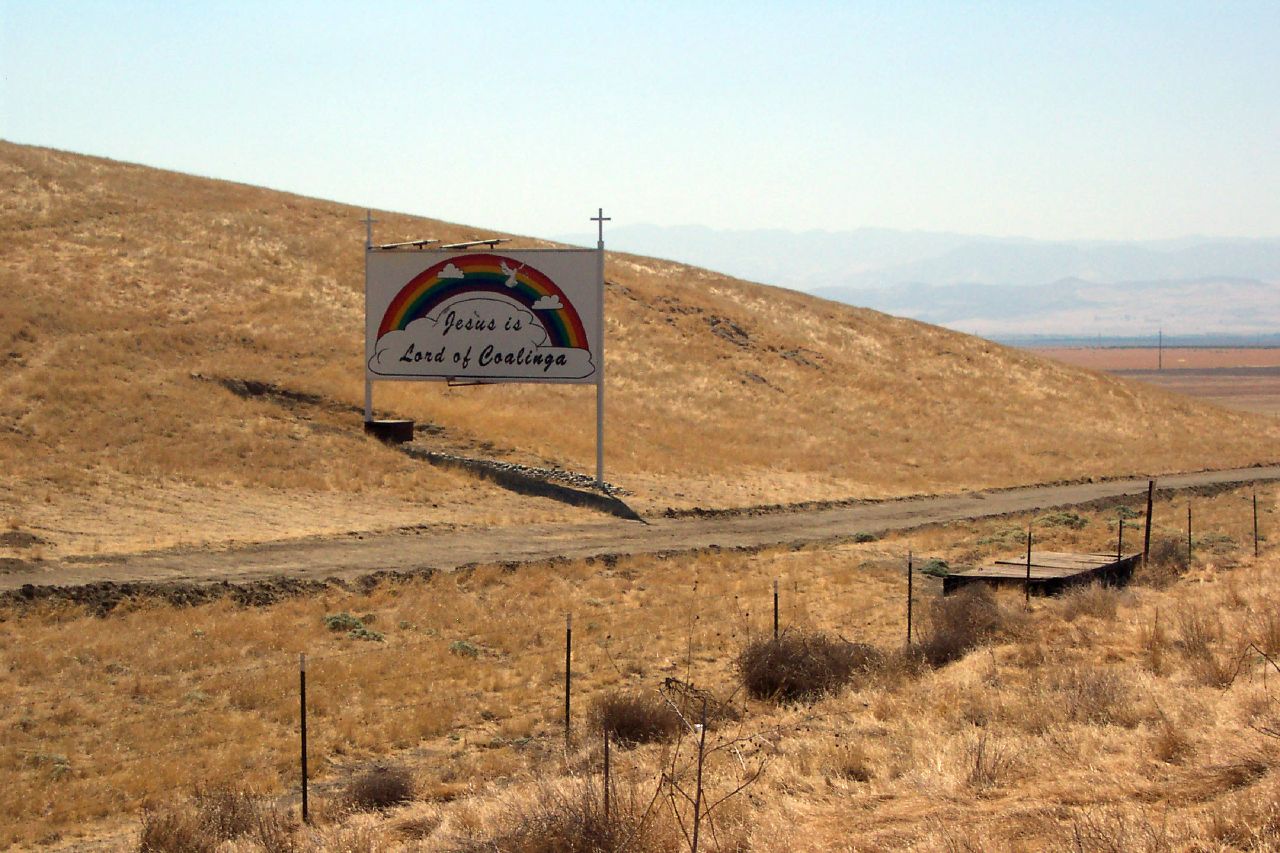
Continuing on with my California tour, I left Manteca, the town of Lard, and headed south on Interstate 5, the aorta of California. My destination was Paso Robles. In order to get there I chose to take the long road. The long road went through Coalinga. I'd grown up and lived in California most of my life and somehow avoided Coalinga, or more likely it avoided me.
The road from I-5 to Coalinga passes through a low range of hills peppered with oil well pump jacks, resembling overgrown grasshoppers, similar to their smaller, lowly cousins that rattle up and away in advance of any hiker strolling through these hills willing to chance rattlesnakes and a sockful of foxtails.
Coalinga is actually set in a beautiful valley of pasture, hayfields, and a gravel pit. The town itself is rather bland and on this warm Wednesday afternoon it was unhurried and quiet. I was in need of a big latte and found a local coffee spot just off the main street in what could oxymoronically be called the shopping district. Three teens, a boy and two girls, were sitting around chatting. One of the girls actually worked there and whipped up a 20 ouncer for me. The inside had a smattering of decorative Christian paraphenalia and slogans. I left a nice tip and hit the road.
As a side note, Coalinga was struck by a major earthquake in 1983 that destroyed 800 homes in the town. The quake was felt over a wide area, as far away as Los Angeles and western Nevada.
USGS - Coalinga Earthquake
SeismoWatch - Coalinga Earthquake
Saturday, October 07, 2006
Pombo Country and the Washington Connection - California Dreamin' Part IV
A leg of my California tour last week took me from San Leandro in the East Bay Area to my next project in the San Joaquin Valley farm town of Manteca, which means lard in Spanish. I had a hotel reservation in Tracy, just west of Manteca.
A steady stream of traffic flows eastward on Interstate 580 during the late afternoon commute. The Bay Area extends its reach east all the way to Tracy and beyond, where workers priced out of the market in the Bay Area find more affordable cookie-cutter squeaky clean tract homes in the flat farmlands of the northern San Joaquin Valley. Tracy, it seems, is evolving into a bedroom community. Large tracts of land around Tracy are for sale and the signs facing the freeway are all Pombo Real Estate.
At the heart of it all is Richard Pombo – “Rancher and Congressman,” which is the slogan one sees everywhere on the campaign signs as the November election approaches. It’s the kind of slogan you would expect would ring solid with the electorate of this agricultural area. Pombo is the powerful Chairman of the House Committee on Resources and is running for his eighth term in Congress. He is known as a strong advocate of private property rights and not exactly a friend of the environment.
I first heard of Richard Pombo in 2004 when the Wild Sky Wilderness Bill was being discussed in the House Resources Subcommittee on Forests and Forest Health. The bill would have designated as wilderness 106,000 acres of lowland forest and high mountains of the western Cascades area around the Skykomish River. The bill had broad bipartisan support and input from many stakeholders, including snowmobile and off-road vehicle enthusiasts. The bill twice passed the Senate, only to get stalled in the House Resources Committee, never being voted on in the full House. In a committee hearing, Chairman Pombo expressed reservations about 16,000 acre portion that the Forest Service did not want included as wilderness.
Back then in 2004, Representative George Nethercutt, a Republican from eastern Washington was contemplating a run for Senator Patty Murray’s seat. Senator Murray was a prime sponsor of Wild Sky in the Senate. Nethercutt needed to show he had the environmental credentials with the voters of western Washington. He took it upon himself to work with Pombo to make changes to the bill that would get it out of committee and onto the floor where passage was assured. The whole thing turned ugly when the compromise proposed by Nethercutt was unacceptable to the bill’s original sponsors, primarily Representative Rick Larsen, Democrat, in whose district the Wild Sky Wilderness would fall. Chairman Pombo withdrew the bill and said he acted after being told that the Washington congressional delegation couldn't resolve their differences.
As it turned out, Nethercutt did run for U.S. Senate in 2004. He was thoroughly trounced by Murray, losing by 12 points, receiving only 43 percent of the vote to Murray's 55 percent.
Richard Pombo is quite a controversial figure in his own right. Besides being a forceful advocate for private property rights, supporter of drilling in ANWR, and a reformer of the Endangered Species Act, he’s also paid significant amounts of money to family members out of campaign funds, supported the construction of a freeway to enhance the value of real estate he owns, and had links to Jack Abramoff. Currently Pombo is running against Democrat Jerry McNerney for his congressional seat. The race is becoming a close one. A recent poll showed McNerney leading by two points.
A steady stream of traffic flows eastward on Interstate 580 during the late afternoon commute. The Bay Area extends its reach east all the way to Tracy and beyond, where workers priced out of the market in the Bay Area find more affordable cookie-cutter squeaky clean tract homes in the flat farmlands of the northern San Joaquin Valley. Tracy, it seems, is evolving into a bedroom community. Large tracts of land around Tracy are for sale and the signs facing the freeway are all Pombo Real Estate.
At the heart of it all is Richard Pombo – “Rancher and Congressman,” which is the slogan one sees everywhere on the campaign signs as the November election approaches. It’s the kind of slogan you would expect would ring solid with the electorate of this agricultural area. Pombo is the powerful Chairman of the House Committee on Resources and is running for his eighth term in Congress. He is known as a strong advocate of private property rights and not exactly a friend of the environment.
I first heard of Richard Pombo in 2004 when the Wild Sky Wilderness Bill was being discussed in the House Resources Subcommittee on Forests and Forest Health. The bill would have designated as wilderness 106,000 acres of lowland forest and high mountains of the western Cascades area around the Skykomish River. The bill had broad bipartisan support and input from many stakeholders, including snowmobile and off-road vehicle enthusiasts. The bill twice passed the Senate, only to get stalled in the House Resources Committee, never being voted on in the full House. In a committee hearing, Chairman Pombo expressed reservations about 16,000 acre portion that the Forest Service did not want included as wilderness.
Back then in 2004, Representative George Nethercutt, a Republican from eastern Washington was contemplating a run for Senator Patty Murray’s seat. Senator Murray was a prime sponsor of Wild Sky in the Senate. Nethercutt needed to show he had the environmental credentials with the voters of western Washington. He took it upon himself to work with Pombo to make changes to the bill that would get it out of committee and onto the floor where passage was assured. The whole thing turned ugly when the compromise proposed by Nethercutt was unacceptable to the bill’s original sponsors, primarily Representative Rick Larsen, Democrat, in whose district the Wild Sky Wilderness would fall. Chairman Pombo withdrew the bill and said he acted after being told that the Washington congressional delegation couldn't resolve their differences.
As it turned out, Nethercutt did run for U.S. Senate in 2004. He was thoroughly trounced by Murray, losing by 12 points, receiving only 43 percent of the vote to Murray's 55 percent.
Richard Pombo is quite a controversial figure in his own right. Besides being a forceful advocate for private property rights, supporter of drilling in ANWR, and a reformer of the Endangered Species Act, he’s also paid significant amounts of money to family members out of campaign funds, supported the construction of a freeway to enhance the value of real estate he owns, and had links to Jack Abramoff. Currently Pombo is running against Democrat Jerry McNerney for his congressional seat. The race is becoming a close one. A recent poll showed McNerney leading by two points.
Thursday, October 05, 2006
Rumblings a Reality
Sunnyvale is go. The site historically had a dry cleaner and two gas stations. Sweet. I have a probe rig penciled in a week from this Monday. I'll be in the field Monday morning in Sunnyvale, meeting a colleague from our Roseville office. I'm working late wrapping up reports from last week's California tour.
Subscribe to:
Posts (Atom)

